Padel for Beginners - What You Need to Know Before Your First Match
Padel is the fastest-growing racket sport in the world. In Switzerland, courts are popping up everywhere, clubs have waiting lists, and once you've played it, you rarely play just once. The reason is simple: Padel is playable after 20 minutes, fun after an hour, and you'll be hooked after a month. This guide will take you, as a Padel beginner, through everything that matters for getting started – rules, equipment, basic technique, and common mistakes in the first few weeks.
What is Padel, anyway?
Padel is played in doubles on a 20 by 10-meter court, surrounded by glass walls and metal mesh. The ball, similar to squash, can be played off the walls, but must bounce on the court first. The net is lower than in tennis, the rackets are shorter, solid, and have no strings. Scoring is like tennis: 15, 30, 40, game.
The crucial difference from tennis: Padel is slower, more tactical, and forgiving of beginner mistakes. The walls make it possible to return balls that would otherwise be lost. This means you get into the flow of the game faster and experience fewer frustrating moments.
Padel Rules in Five Minutes
For your first day on the court, these basic rules are enough:
- Serve: Underhand, diagonally into the opponent's court, after one bounce. The ball must not hit the mesh directly after the serve.
- Using the Walls: You can play off your own walls after the ball bounces. Hitting the opponent's wall directly without prior ground contact is a fault.
- Scoring: Like tennis - 15, 30, 40, game. At deuce: One point advantage is enough for the game.
- Winning a Point: The ball must bounce in the opponent's court. After one bounce there, it can run along the walls for any length of time.
- Faults: Two bounces in your own court, ball into your own mesh, ball directly out over the glass.
You'll learn the finer points – returning after wall contact, in which situations the ball is allowed to cross the net – during the game. Nobody pulls out a rulebook during a beginner's match.
The Right Equipment to Get Started
You need three things: a racket, shoes, and balls. Your first court visit often works with rental equipment, but after match number three at the latest, you'll want your own gear.
Padel Rackets for Beginners
A beginner's racket has a round shape, a soft foam surface, and weighs around 360 grams. The round shape has the largest sweet spot – exactly what you need as a beginner. Teardrop and diamond shapes are for advanced players; there, the sweet spot is smaller and the racket is more aggressive.
What you should avoid: Cheap rackets under 60 francs from the supermarket. The surface is hard, the balance is poor, and tennis elbow is pre-programmed. A solid beginner's racket costs between 120 and 200 francs and lasts two seasons.
Padel Shoes
Tennis shoes work in a pinch, but real Padel shoes have a herringbone tread that provides the necessary grip on the artificial turf-sand of the courts without sticking. Running shoes have no business on the court – the lateral movements will destroy the upper material in one season.
Balls
Padel balls look like tennis balls but have slightly lower pressure. This makes them slower and more controllable. Standard brands: Head, Bullpadel, Wilson. Three balls in a can last about five to eight matches, then they lose their bounce.
The First Four Shots You'll Learn
You don't need to know bandeja and vibora to have fun. Focus on these four:
1. Forehand from the ground: Your bread-and-butter shot from the baseline. 2. Backhand from the ground: Many beginners find two-handed easier than one-handed. 3. Volley at the net: Short movement, racket in front of the body, just block the ball. 4. Globo (Lob): High ball over the opponent to the back of the court to force them away from the net position.
Smash, bandeja, and vibora come later – at the earliest after your first ten hours of play.
The 5 Most Common Beginner Mistakes
Hitting too hard. Padel is about precision, not power. Beginners win points with consistent balls in the court, not winners.
Wrong court position. In doubles, you either both stand at the baseline or both at the net. Never one in front and one behind – that gets brutally punished.
Hitting like in tennis. Padel shots are shorter. No big wind-up, instead compact impact from the wrist and shoulders.
Ignoring the wall. Many beginners let balls go that would bounce behind them off the glass – thereby giving away points they could easily return.
Poor communication in doubles. Calls like "Mine!" or "Yours!" sound trivial but are crucial. Without communication, both will run for the same ball.
Where to Play in Switzerland?
The number of padel courts in Switzerland has multiplied in the last three years. Larger facilities can be found in Zurich, Bern, Basel, Lausanne, and Geneva. More and more tennis clubs are adding padel courts. Booking usually goes through apps like Playtomic – simply download the app, find a club, reserve a slot. Cost: 20 to 40 francs per hour per court, divided by four players, makes it a very fair average.
Your Plan for Getting Started
If you really want to get into it, we recommend this approach:
- Week 1: Two matches with rental equipment. See if you like the sport.
- Week 2: A trial lesson with a Padel coach. 60 to 90 francs that will pay off enormously – you'll save weeks of breaking bad habits.
- Week 3-4: Buy your own racket and shoes. From now on, play at least once a week.
- From Month 2: Build a regular playing group or join a club. Without regular partners, it will be difficult to keep at it.
Conclusion
Padel for beginners is not a steep mountain, but a gentle ramp. Initial successes come quickly, and the learning curve remains steep even after months. Getting started rarely fails because of the game – it fails because of the surrounding factors: wrong racket, no partners, no structure.
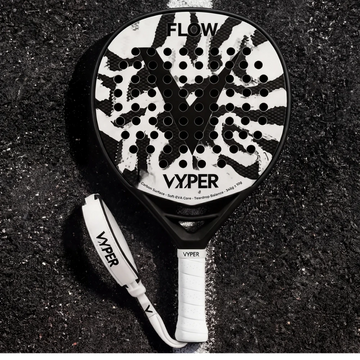
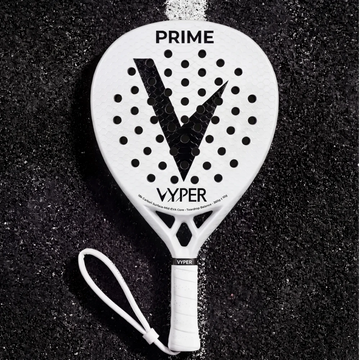
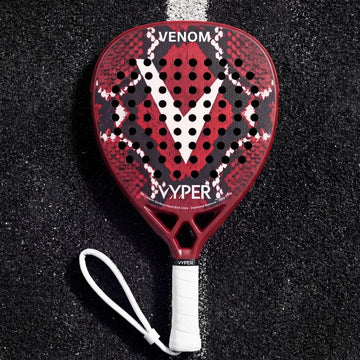
Check out our Padel equipment in the VYPER Racket Collection – we've put together beginner rackets and accessories that we use ourselves on the court. Swiss quality, uncompromising performance.
Recommended VYPER Products on the Topic
Unsure which product? Write to us via WhatsApp +41 78 664 10 19 or start the Racket-Finder Quiz.
Sources & Data Basis
- Swiss Tennis – national association, coordinates padel development in Switzerland (courts, tournaments, clubs).
- International Padel Federation (FIP) – worldwide player and country statistics.
- Premier Padel Tour – professional padel touring, player rankings.
- Own surveys VYPER Switzerland (court tests, dealer data, 2024–2026).
Note: Market statistics on padel in Switzerland are based on data from Swiss Tennis and supplementary industry estimates as of 2025/2026. Specific figures vary depending on the source and survey period.