Table of Contents
Buying a Padel Racket: The Ultimate Guide 2026
Finding the right padel racket is not rocket science – but there's more to consider than just the price. Shape, weight, material, and balance determine whether the racket suits your playing style or if it feels wrong after three months. This guide will walk you through the most important decision factors, without overwhelming you with unnecessary marketing.
Shape: The Decisive Factor for Your Playing Type
The racket face comes in three classic shapes. Each defines where the sweet spot is – the area where shots are transferred most efficiently.
Round: The sweet spot is deep in the center of the racket. Mis-hits are better absorbed, and handling is quick and reactive. Anyone with less than a year of experience or who specifically values control will be well-served by a round racket. The disadvantage: less power on smashes and overhead shots.
Teardrop: A compromise between control and power. The sweet spot is slightly higher than with round models, and the hitting surface is a bit larger. For players with one year or more of experience, the teardrop shape is often the right choice – it's forgiving yet still offers reserves for offensive shots.
Diamond: Sweet spot high up, maximum hitting power. Those who hit technically clean and precisely will get the most out of diamond rackets. This shape is less suitable for beginners, as off-center hits transfer little energy to the ball.
Rule of thumb: The less experience you have, the deeper the sweet spot should be.
Weight: Between Control and Power
Padel rackets typically weigh between 340 and 385 grams. Most fall in the 355–375 g range. Sounds marginal – but it's not.
Lighter rackets (340–355 g) react faster, put less strain on the arm, and allow for more precise wrist movements at the net. They are well-suited for players with smaller builds, for women, or for anyone returning after an elbow or shoulder injury.
Medium-weight rackets (355–370 g) are the standard. They work for most players, from beginners to advanced.
Heavy rackets (370–385 g) generate more pressure on the ball with a calm, powerful swing. Useful for players who rely on smashes and aggressive baseline shots – but not for players who enjoy quick volleys at the net.
A tip: Grab the racket in the store and hold it for a minute. If it feels heavy after 30 seconds, it will be too heavy after two hours of training.
Material: Carbon or Fiberglass?
The racket face is made of either carbon fiber or fiberglass. Carbon is stiffer, transfers more energy, and generates more spin. Fiberglass is more elastic, more forgiving, and gentler on the arm.
For beginners, fiberglass is the better choice: the trampoline effect of the surface compensates for weak technique and prevents arm pain.
After a year of regular play, switching to carbon is worthwhile. The stiffness rewards correct hitting points with significantly more control and spin on the ball.
Important: The so-called K-value (3K, 12K, 18K) describes the filament density of the carbon. Higher values mean a finer weave and more homogeneous power transfer. In everyday play, the difference between 12K and 18K is subtle. It only becomes relevant at tournament level.
Core: EVA or Foam?
The core – the material inside the racket – significantly influences how a shot feels.
EVA core (Ethylene-vinyl acetate): Hard core, precise feedback. You feel exactly whether the shot was good. Combined with carbon, it results in maximum control. For players who prioritize precision over comfort.
Foam core (Polyurethane foam): Softer, more resilient core. More ball feel, more comfort. More forgiving than EVA. Combined with fiberglass, it's the classic beginner racket.
In practice, in 2026, you'll find many rackets with a carbon face and a foam core – this is a popular compromise that combines power and playability.
Balance: Head-heavy or Handle-heavy?
Balance describes where the racket's center of gravity lies.
Head-heavy rackets (the center of gravity is at the top) put more mass into the shot. Useful for smashes and bandeja (the flat overhead shot), as racket head speed directly generates power. Typical for diamond rackets.
Handle-heavy or balanced rackets are quicker to maneuver. Preferred for net volleys, quick reactions, and precision shots.
You can determine the balance by balancing the racket in the middle (at the bridge between the grip and the head): if it tips towards the head, it's head-heavy. If it remains horizontal or tips towards the grip, it's balanced or handle-heavy.
Price Ranges in Switzerland
The price usually correlates with the materials used and the quality of workmanship. A brief overview of the common segments:
CHF 60–120 (Beginner): Fiberglass or simple carbon, foam core, round shapes. For casual players and anyone wanting to learn the game. Durability and precision are limited but sufficient for getting started.
CHF 120–250 (Mid-Range): This is where solid carbon (3K–12K), teardrop shapes, and often EVA cores begin. This is the best value-for-money segment for regular players. If you play two to three times a week, this is the right place for you.
CHF 250–400 (High Performance): Premium carbon, finely woven surfaces, precise weight and balance tuning. For ambitious players with a clear playing style. This racket is a tool, not a lifestyle object.
CHF 400+ (Pro-Segment): Custom weights, 18K carbon, pro-optimized balance, endorsement models. Makes sense for tournament players who feel – and want to feel – the difference.
What you shouldn't do
Buy without touching the racket. Photos and spec sheets say little about handling. Whenever possible: pick up the racket, swing it briefly. Some providers in Switzerland offer trial sessions.
Invest in carbon too early. A beginner with a 350-franc diamond carbon racket doesn't play better. They hit differently – and often worse, because the feedback is too harsh and the forgiveness too low.
Choose a racket based on looks. Black and carbon grain look strong. But a racket that doesn't suit your playing style will cost you points, not compliments.
Ignore grip size. Almost all padel rackets come in a standard size. You can adjust with overgrips. If you have a smaller hand, start thin or without an overgrip. If you want stability, wrap two layers. Check this before you buy.
Where to buy in Switzerland 2026
The Swiss market has grown in recent years. There are now well-stocked online shops with Swiss warehouses as well as specialized padel shops, especially in German-speaking Switzerland.
What matters when buying in Switzerland:
Local support. Grip tape and edge tape are consumables. If you can buy refills directly from the provider, it saves time and customs fees.
Warranty. In the Swiss market, a two-year warranty is legally required. High-quality manufacturers also offer manufacturer warranties. Pay attention to this, especially in the segment above CHF 200.
Return policy. No online shop can fully replace what a test hit in a store offers. A 14-day return policy is legally mandated in Switzerland.
VYPER Switzerland offers a selection of high-quality padel rackets, chosen for the Swiss market. No oversupply, no compromises on material quality. Check out the range: VYPER Padel Rackets.
Brand Overview: Who builds what?
The market for padel rackets in 2026 is more diverse than ever before. Some brands that are present in Swiss retail and what distinguishes them:
Bullpadel: Spanish brand, strong in the mid and high-end segments. Known for balanced performance and durable frames. Many of their models are particularly tailored to the European playing feel.
NOX: Also from Spain, home brand of world-ranking player Alejandro Galán. Focus on high-carbon models (12K, 18K). For ambitious players who want to get the most out of the racket.
Head: Wide range from beginner to professional. Solid manufacturing quality, well available in Switzerland. The Graphene series offers good value for money in the mid-segment.
Adidas Padel: Active for several years with its own padel line. The Metalbone series is popular with advanced players who want modern carbon performance.
Babolat: Traditionally strong in tennis, now also with a serious padel line. Especially the models for beginners and advanced players have established themselves in the Swiss scene.
Brand loyalty is less relevant in padel than in tennis. What matters is whether the specifications suit your playing style – not which logo is on the racket.
Checklist before buying
Before you click "buy" or leave the checkout:
- Does the shape suit my skill level? (Round for beginners, Teardrop/Diamond for advanced)
- Is the weight right? Do I have arm problems or am I rather strong?
- Material: Fiberglass for beginners, Carbon after one year of experience
- Core: Foam for more comfort, EVA for more control
- Budget: Am I in the right segment?
- Can you return the racket if it doesn't feel right?
Anyone who goes through these points won't buy a racket that collects dust in the closet after a year.
Brand Comparison: VYPER vs Bullpadel vs Babolat vs Head
If you have owned rackets from other brands or are comparing between brands, here's an honest overview of the four brands that dominate the Swiss padel market. Assessments are based on our own playtesting (at least 5 hours per racket), common specifications, and market prices as of May 2026.
| Criterion | VYPER | Bullpadel | Babolat | Head |
|---|---|---|---|---|
| Price Range (CH) | CHF 169–289 | CHF 180–360 | CHF 200–340 | CHF 150–320 |
| Carbon (Pro-Tier) | 18K | 18K + 3K Tow | High Modulus | Graphene + Carbon |
| Product Range Depth | Curated (3 models) | Very Wide (50+) | Wide (20+) | Medium (15+) |
| Swiss Shipping | 24h from Würenlingen | 3–5 days (ES/DE) | 3–5 days (FR) | 3–5 days (AT/DE) |
| Consultation | WhatsApp within 30 min | Dealer Network | Dealer / Hotline | Dealer / Online |
| Return Policy CH | 30 days free | 14 days (CH dealers) | 14 days | 14 days |
| Brand Profile | Swiss Direct-to-Consumer | Spanish Padel Specialist (Pro Tour) | French Tennis Crossover | Austrian Racket Sports Manufacturer |
When to choose VYPER, when another brand? We recommend VYPER if you value fast Swiss shipping, a curated selection without decision fatigue, and personal advice. If you want a very specific Pro Tour racket (e.g., the Bullpadel Vertex 04 used by a particular player), go with that manufacturer. For crossover needs (tennis + padel setup), Babolat or Head are obvious choices. Brand loyalty is less crucial in padel than fitting your own playing style – form follows function.
Specific Racket Recommendations by Skill Level
After 5+ hours of court tests per model, here are our three concrete VYPER recommendations:
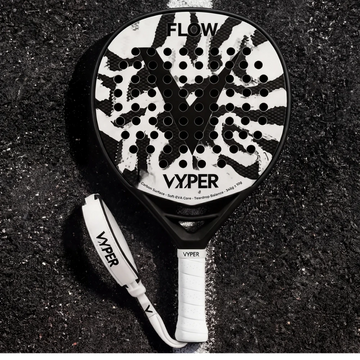
- Beginner (0–12 months experience): VYPER Flow – Round shape, 12K Carbon, soft EVA core, balanced, CHF 169. Forgives mis-hits and builds playing confidence.
- All-rounder (1–3 years, Control > Power): VYPER Impact – Teardrop shape, 12K/18K Hybrid, light-to-medium balance, CHF 219. Best all-round choice for players who don't want to commit early.
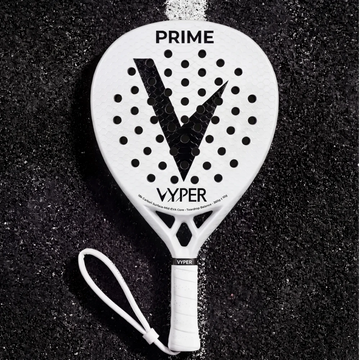
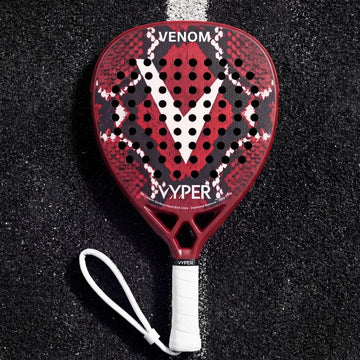
- Advanced / Offensive (3+ years, Power-oriented): VYPER Venom or Prime – Diamond shape, 18K Carbon, head-heavy balance, CHF 289. Maximum power output with clean technique.
If you're unsure: start the 5-question Racket Finder Quiz or contact us directly via WhatsApp – we respond Mon–Sun 08:00–22:00 within 30 minutes.
Conclusion and Quick Decision Guide
Choosing a padel racket is a match between playing style and material, not "the most expensive is the best." The three most important factors in descending priority:
- Shape must match skill level: Round for beginners and control players, Teardrop for all-rounders, Diamond for offensive pros. This factor alone determines 70% of satisfaction after 6 months.
- Balance before weight: A 360g racket with balanced feel often feels lighter than a 350g head-heavy racket. Try before you buy if possible.
- Carbon density determines touch feel: 12K for more control and touch, 18K for more power and precision. Pro models usually use 18K, but that doesn't make them "better" – just more unforgiving on mis-hits.
Quick-Pick by Budget:
- CHF 150–200: VYPER Flow or Decathlon Kuikma Pro Carbon (for hardcore budget buyers)
- CHF 200–270: VYPER Impact, Bullpadel Vertex Comfort, Head Delta Pro
- CHF 270–350: VYPER Venom / Prime, Bullpadel Vertex 04, Babolat Air Veron
Last Tip: Regardless of the brand – buy from a retailer with a genuine return policy and a consultation channel you can communicate with. Padel rackets are not one-size-fits-all. If the first racket doesn't suit you after three weeks, you need someone who will exchange it for the right model – not an online shop without response times.
Questions about specific models? Write to us via WhatsApp +41 78 664 10 19 or email info@vyper.ch. We are padel players ourselves – you won't get bot responses from us. — Leandro
Sources & Data Basis
- Swiss Tennis – national association, coordinates padel development in Switzerland (courts, tournaments, clubs).
- International Padel Federation (FIP) – worldwide player and country statistics.
- Premier Padel Tour – professional padel touring, player rankings.
- Own surveys by VYPER Switzerland (court tests, dealer data, 2024–2026).
Note: Market statistics for padel in Switzerland are based on data from Swiss Tennis and supplementary industry estimates as of 2025/2026. Specific figures vary depending on the source and survey period.