Padel is growing. In Switzerland alone, the number of registered courts has more than doubled since 2020. Anyone who steps onto the court for the first time quickly realizes: Padel rules are simple enough to start playing immediately – but the details make all the difference. Knowing this difference doesn't mean memorizing a rulebook. It means understanding the rhythm of the game: when the ball is good, when it's out, how the serve works, and why the wall suddenly becomes your best tool. This guide provides everything you need to know on the court.
The Court: 10 × 20 Meters, Four Walls
A padel court is 20 meters long and 10 meters wide – significantly smaller than a tennis court. It's enclosed by glass walls and metal mesh, 3 meters high at the back wall, 2 meters high at the sides. A net divides the court in the middle: 88 centimeters high in the center, 92 centimeters at the posts.
Each half of the court has two service boxes, separated by a center line. The line parallel to the net – 3 meters away – is called the service line. It marks where the serve must land.
Padel is exclusively played in doubles: two against two. Singles is not part of the official rules – the court would be too large for it anyway.
The Serve: Underhand with a System
The serve follows clear padel game rules – and those coming from tennis will need to adjust.
Step-by-step process:
- The server stands behind the service line, between the center line and the side wall.
- They let the ball bounce once on the ground.
- They hit it below the waist – the racket head must not rise above the hip.
- The ball flies diagonally into the opposing service box.
If the serve touches the net and then lands correctly in the court, it's considered a "let" – it's repeated once. Two consecutive faults: point for the opponent.
No overhead, no sidearm swing, no serve from movement. The underhand stroke is mandatory, without exception.
Padel Scoring Rules: Like Tennis, with a Special Feature
Scoring follows the tennis system: 0, 15, 30, 40, game. Four points to win – with at least a two-point lead.
At 40:40 (Deuce), there are two variations depending on the game mode:
- Golden Point: The next rally decides the game immediately. No advantages.
- Star Point (from 2026, professional level): Up to two advantage points are possible. If it's a tie again after that, a single point decides the game on the third deuce – the Star Point.
Sets and Match:
A set goes to the team that first wins six games – with at least a two-game lead. At 6:6, a tie-break follows: played to 7 points, requiring at least a 2-point lead. A match is best of three sets. If it's 1:1, a third set follows.
In Swiss club play, Golden Point is used almost everywhere, which makes game times more predictable. Those competing in national tournaments follow the current FIP guidelines.
The Wall: The Game Element That Defines Padel
The unique aspect of padel – and at the same time the biggest source of confusion for newcomers – is the wall. It is not an obstacle. It is part of the playing field.
What is allowed
After the ball has bounced on one's own ground, it may touch one's own glass or mesh wall and still be played. Players may retreat to the wall, stand with their backs to the glass, and hit the ball into the opponent's court from there.
If the ball touches the opponent's back wall after bouncing on their ground and comes back, the opponent can still play it – as long as the ball has not bounced twice on the ground.
What is not allowed
If the ball hits the wall before it touches the ground, it's a fault. If the ball flies directly into the metal mesh without a prior bounce on the ground on one's own side: also a fault.
Rule of thumb: Ground first, then wall – always. Conversely: fault.
This is exactly why padel is strategically deeper than it looks. The player who reads bounces, maneuvers opponents into difficult positions, and uses the wall as an extended playing area wins – not necessarily the one with the hardest shot.
Other Padel Game Rules You Need to Know
Return and Double Bounce
After the serve – and with every subsequent shot – the ball may bounce once on the ground before a player hits it back. If it bounces twice: point for the opponent. Volley – i.e., hitting the ball directly without it touching the ground – is allowed and often tactically useful, especially at the net.
Net Rule
No player may touch the net, net posts, or side tension cables while the point is in play. This applies equally to rackets, body, and clothing. Touching means immediate loss of the point – even if the contact was unintentional.
Ball Contact with the Body
Only the racket may hit the ball. If the ball touches a player's body – regardless of which side of the net – that player's team loses the point. No exceptions.
Leaving the Court
A rule that surprises many: players may leave the court through the door to play a ball that has bounced far out after hitting the wall. This move is not uncommon in experienced game rounds – it is often the only way to save a good point.
Service Change
The serve alternates to the opposing team after each game. Within a team, the two players take turns serving. The player who serves in the first game also serves in the third – and so on.
FIP Rule Changes 2026: What's Changing at the Professional Level
Revised rules from the International Padel Federation have been in effect since January 2026. For hobby players in club operations, little will change for now. Those following the professional season should be aware of these innovations:
Star Point replaces Golden Point (professional sports): The new system still allows advantage points on the first and second deuce. Only on the third deuce does a single point decide the game – the Star Point. The goal: to maintain more tactical depth without unnecessarily prolonging matches.
Eating and drinking between points: At the professional level, consuming food and drinks between points is prohibited. Breaks are only allowed during designated game interruptions.
These changes directly affect the Premier Padel Tour and FIP tournaments. In Swiss amateur areas, the previous system still applies – unless a tournament explicitly specifies the FIP 2026 rules.
Common Beginner Mistakes – And How to Avoid Them
Serve above the waist: The most common mistake, especially for those switching from tennis. No overhead, no side swing – hit the ball below hip height, otherwise the serve does not count.
Ignoring the wall: Beginners instinctively hit the ball directly back without realizing that after bouncing on the ground, it could first touch their own wall and still be perfectly legal. The wall provides time, opens up new angles – ignoring it costs points.
Touching the net: In the heat of the moment, especially during a net attack, players unconsciously touch the net. Consequence: point lost. Maintaining an arm's length distance from the net is a useful basic rule.
Overlooking a double bounce: Under pressure, players sometimes lose track of whether the ball bounced once or twice. Fair play is standard in club play – when in doubt, replay the point and continue.
Padel in Swiss Club Life
In Switzerland, padel is primarily played in indoor facilities, which guarantees consistent conditions regardless of the weather. The Swiss Padel Association (SPA) aligns with the FIP rulebook, which thus directly applies to all official tournaments.
A typical match lasts between 60 and 90 minutes. Most clubs book courts in 90-minute units – enough for two complete sets, with time for warm-up and short breaks.
For beginners, many clubs recommend a trial game with an experienced player or a coach. The padel game rules can be explained in 15 minutes – the nuances of wall use then come naturally with the first points.
On the Court
Padel rules are quickly understood. What takes time is learning to read the game: anticipating walls, moving opponents, controlling rallies. The rest comes with practice.
The next time you're on the court, keep three things in mind: serve below the waist, ground before the wall, don't touch the net. This covers 80 percent of the situations that are truly relevant in everyday play.
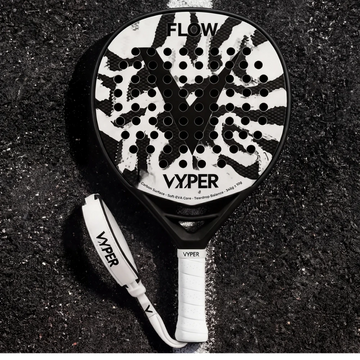
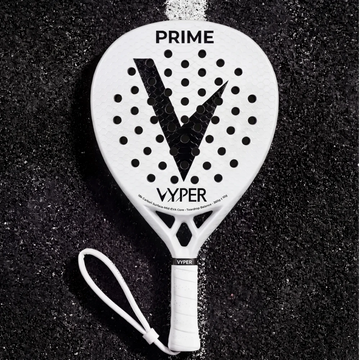
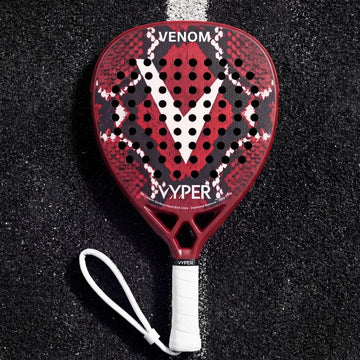
For the right equipment: Check out our padel rackets and balls at VYPER Switzerland – selected for performance on Swiss courts, not for the catalog.
Recommended VYPER products on the topic
Unsure which product? Message us on WhatsApp +41 78 664 10 19 or start the Racket Finder Quiz.
Sources & Data Basis
- Swiss Tennis – national association, coordinates padel development in Switzerland (courts, tournaments, clubs).
- International Padel Federation (FIP) – worldwide player and country statistics.
- Premier Padel Tour – professional padel touring, player rankings.
- Own surveys by VYPER Switzerland (court tests, dealer data, 2024–2026).
Note: Padel market statistics in Switzerland are based on data from Swiss Tennis and supplementary industry estimates as of 2025/2026. Specific figures vary depending on the source and survey period.