Two rackets, one ball, one net – but if you think padel and tennis are the same, you're mistaken. Both sports share a common DNA: the scoring system, the net, the double court setup. But the rules, equipment, and tactical thinking behind them are fundamentally different. Anyone coming from tennis will notice this at the latest with their first serve. Newcomers are often surprised by how quickly they succeed in their first game – and how long it takes to truly become good. Here are the seven differences that count.
1. The court: Smaller, enclosed, complex
A padel court measures 10 by 20 meters. A tennis court for doubles is 10.97 by 23.77 meters – about 75 percent more area. That sounds like an easier game. It's not.
The decisive factor is the walls. A padel court is completely enclosed: glass back walls (at least 4 meters high), side walls made from a combination of glass and metal mesh. These walls are not an obstacle – they are an active part of the game. A ball that touches the back wall after bouncing can be played back. This fundamentally changes attack, defense, and spatial awareness.
The net in padel is 88 cm high in the middle and 92 cm at the sides. In tennis, the height in the middle is 91.4 cm. A marginal difference – but it influences how deep and flat the ball is played.
Tennis courts have no walls. If the ball goes out, the point is over. In padel, it sometimes only begins when the ball comes back from the wall.
2. The racket: Solid, perforated, stringless
The most obvious difference is in your hand. A padel racket has no strings. The hitting surface is solid and made of EVA foam or fiberglass, sometimes carbon for higher control and stability. The perforations – small round holes across the entire surface – reduce air resistance during the swing.
Tennis rackets are strung, up to 73 cm long, and designed to transfer power from the arm with a large leverage effect. Padel rackets measure a maximum of 45.5 cm and are secured to the wrist with a short safety strap. Energy is transferred differently: less leverage, more compact movement, greater reliance on control and placement.
There are three basic shapes for padel rackets: round (more control, larger sweet spot, good for beginners), diamond (more power, smaller sweet spot, for advanced players), and teardrop (a compromise). Those coming from tennis are better off starting with a round model. The timing is different, the trajectories are flatter, and aggressive shots from a backward position rarely work.
3. The serve: Underhand, below the hip
In tennis, every point begins with a standing serve – overhead, with maximum power, aimed precisely into the service box. Aces are possible, and the first serve is a tactical weapon.
In padel, this serve is not allowed. The ball is dropped to the ground next to the body and struck below hip height on or after the first bounce. The shot is played diagonally into the opponent's service box. The ball must not touch the server's back wall – and it must be played behind the service line. Two attempts, as in tennis.
This rule makes the serve in padel structurally weaker. An ace is hardly possible. The first shot sets a framework but rarely decides the point alone. Rallies occur more frequently and last longer – this is one reason why padel is considered more accessible.
There is also a crucial difference in the return of serve: the ball may be played off the opponent's back wall after the serve. This means that a serve that is too long is not an automatic fault – provided it touches the back wall only after bouncing in the box.
4. Doubles is mandatory – no singles
Tennis can be played as singles or doubles. Padel cannot. Padel is played exclusively in doubles: two against two, at every level, in every match. Officially, there is no padel singles.
This completely changes the dynamic. Communication, positioning, and reading the opposing pair become central. The standard positioning – both players side-by-side at the net line – is constantly shifted by attack and defense. A team that doesn't coordinate its positions will lose against a coordinated pair, even if it is technically superior.
For many, this is an argument to start padel: the social aspect is inseparable from the sport. You win and lose together. The tactical interaction between two players is an element in itself – one that simply doesn't exist in singles tennis.
5. The walls: A third dimension
Walls don't exist in tennis. In padel, they are a tactical tool. An experienced team actively uses the back wall – to save a seemingly lost ball, but also to force the opponent out of their comfort zone.
The "Vibora" – a sideways smash that drives the ball low over the net and precisely into the corner – aims for the ball to "stick" in the corner between the wall and the floor after bouncing, making it unreturnable. The "Globo" is the opposite: a high lob that forces the opponent from the net line, while you close in.
Even the smash is executed differently in padel. A direct overhead shot without wall contact is possible, but often less effective than a controlled shot that makes the ball bounce over the back wall and out of the opponent's court. This technique, called "Por tres" – ground, back wall, side out – requires practice and spatial awareness.
Walls open up tactical possibilities that are nonexistent in tennis. Learning this mechanic takes months. Those who master it win points that visually seemed lost.
6. Scoring: Familiar with a small exception
Padel adopts the scoring system directly from tennis: 15 – 30 – 40 – deuce – advantage – game. A match is played over two won sets, with a super tie-break to 10 points deciding in case of a tie (1:1).
The only difference: the "Golden Point." At deuce, depending on the tournament or agreement, a single decisive point can be played instead of the normal advantage mode. Whoever wins this point wins the game. This option reduces match times without diminishing the excitement and is regularly used on the Premier Padel Tour.
Anyone familiar with the tennis scoring system will immediately feel oriented in padel. Getting started with scoring requires no learning time.
7. Conditioning and learning curve: Faster in, deeper than expected
Good level tennis requires endurance, strength, and years of consistent technical work. A clean topspin at full run is the product of long repetition. Padel is more accessible in the first few months.
The smaller court means less running. Shots are shorter and more compact. Beginners quickly experience real rallies because the ball less often flies directly out of bounds. This provides immediate success – no coincidence, but the structural principle on which padel has grown.
In Switzerland today, there are around 100,000 active padel players on over 400 courts, spread across more than 150 clubs. In 2016, there were only 12 courts in the entire country. Swiss Tennis alone has invested 2 million Swiss francs in building padel infrastructure. Worldwide, the International Padel Federation counts more than 30 million players in over 130 countries.
The low barrier to entry explains the growth. The tactical depth – wall play, setup variations, tempo changes in doubles – explains why many stay. Anyone who thinks padel is easy after two hours hasn't yet played against a well-coordinated pair.
---
Tennis and padel share basic elements, but they are different sports – not just in the rules, but in the thinking behind them. Tennis is a duel. Padel is a combination: control, communication, and wall play.
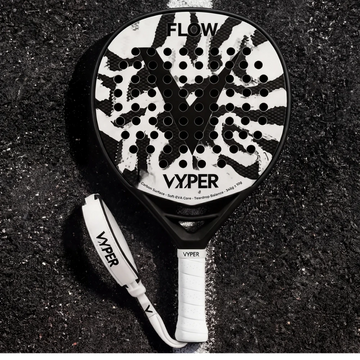
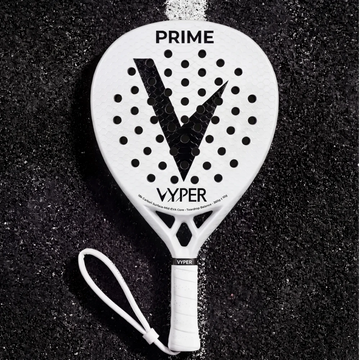
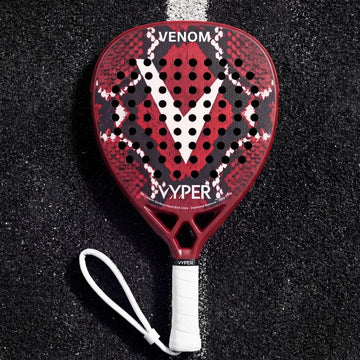
If you want to play padel in Switzerland – equipment that delivers what it promises can be found in the VYPER Padel Shop. Rackets, shoes, and apparel, selected for the game, not for the shelf.
Recommended VYPER products on the topic
Unsure which product? Message us via WhatsApp +41 78 664 10 19 or start the Racket Finder Quiz.
Sources & Data Basis
- Swiss Tennis – national association, coordinates padel development in Switzerland (courts, tournaments, clubs).
- International Padel Federation (FIP) – global player and country statistics.
- Premier Padel Tour – professional padel tour, player rankings.
- Own surveys VYPER Switzerland (court tests, dealer data, 2024–2026).
Note: Market statistics for padel in Switzerland are based on data from Swiss Tennis and supplementary industry estimates as of 2025/2026. Specific figures vary depending on the source and survey period.